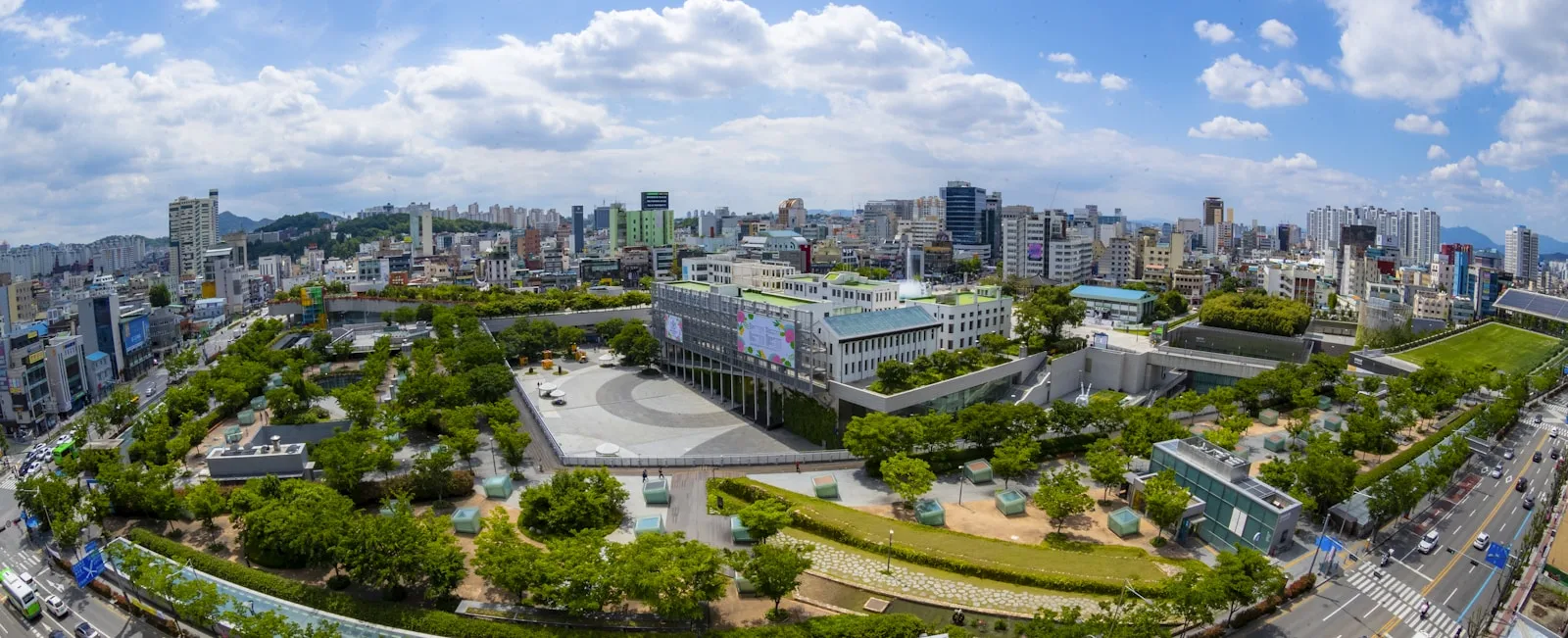
On July 1, 2026, two places that had been governed separately for four decades became one. Gwangju, the metropolitan city, and Jeollanam-do (Jeonnam), the province that wraps around it, merged into a single top-level government: the Jeonnam-Gwangju Integrated Special City (전남광주통합특별시). If you are heading to the region on EPIK, or thinking about it, the headlines can look alarming. The practical reality for teachers is calmer than the headlines, but there is one thing worth planning for.
Here is the short answer, and then the detail. The two provincial-level governments merged, and so did their two offices of education. For a teacher applying to EPIK right now, though, the application itself has not changed. What deserves your attention is something that was already true before the merger and is still true after it: when you apply to teach in this region, you can be placed anywhere from a school in central Gwangju to a rural or island school in Jeonnam. The merger is a good moment to understand what that actually means.
The short version
Gwangju and Jeollanam-do are now one Integrated Special City, and their two offices of education have become one, effective July 1, 2026. Gwangju and Jeonnam still exist as places, and EPIK still lists them as separate placement regions for the Fall 2026 intake. The way you apply to EPIK, your pay scale, your contract, and your E-2 visa are unchanged by the merger. The thing to plan for is placement: EPIK does not guarantee a specific city, so a teacher assigned here can land in metropolitan Gwangju or in a rural or island part of Jeonnam.
What actually changed on July 1, 2026
The merger is real and it is law. It was created by the Special Act on the Establishment of the Jeonnam-Gwangju Integrated Special City (전남광주통합특별시 설치를 위한 특별법, Act No. 21446), promulgated on March 5, 2026 and taking effect on July 1, 2026. The act formally abolishes the former Jeollanam-do province and Gwangju Metropolitan City and replaces them with one integrated government [source: law.go.kr]. It is the first time the two have shared a government since Gwangju was separated out and elevated to a directly governed city in 1986, roughly forty years ago.
Unusually, there was no residents' referendum. Under Korea's Local Autonomy Act, integrating local governments requires the consent of the local councils rather than a public vote, and both councils passed their consent motions on the same day, February 4, 2026 [source: seoul.co.kr]. The National Assembly then passed the special act on March 1, 2026. The whole thing moved quickly, which is part of why some parents and teachers' groups pushed back, a point we return to below.
On June 3, 2026, voters elected the new city's first leaders, who took office on launch day. Min Hyung-bae, a former National Assembly member, was elected the first mayor [source: ytn.co.kr]. More relevant to teachers, voters also elected a single superintendent of education for the whole territory for the first time, replacing the two separate superintendents Gwangju and Jeonnam used to elect on their own. The winner was Kim Dae-jung, the sitting Jeollanam-do superintendent, who came out ahead of a field that included the sitting Gwangju superintendent [source: ikbc.co.kr]. He shares a name with the late South Korean president, but is a different person.
| Before July 1, 2026 | From July 1, 2026 |
|---|---|
| Two governments: Gwangju Metropolitan City and Jeollanam-do province | One government: Jeonnam-Gwangju Integrated Special City |
| Two offices of education, each with its own superintendent | One integrated office of education under one superintendent |
| Cities and counties (Gwangju's districts, Mokpo, Yeosu, and so on) | Same cities and counties, still named and still on the map |
| EPIK application, pay scale, contract, E-2 visa | Unchanged by the merger |
If you are applying to EPIK now, here is what did not change
The most important thing to understand is that a change to the government does not automatically change the teaching program. EPIK, the English Program in Korea, is run nationally by the National Institute for International Education (NIIED), an arm of the Ministry of Education [source: epik.go.kr]. EPIK screens and hires teachers, and then each regional Office of Education decides which school you go to. The merger reorganized the office of education at the top, but it did not rewrite how EPIK recruits, what you get paid, or the terms of your contract.
As of the Fall 2026 intake, EPIK still lists Gwangju and Jeonnam as two separate placement regions among its seventeen, you still pick one preferred Office of Education on your application, and EPIK still states plainly that placement in any specific office or location is not guaranteed. EPIK has confirmed to Korvia that the two offices have merged, but no detailed guidance on what the change means for applicants has followed yet, and there has been no announcement folding Gwangju and Jeonnam into a single placement choice. If that changes for a future intake, it will come from EPIK itself, so read the current EPIK guidelines for your intake and ask your recruiter rather than assume.
Your salary is a good example of why the merger does not automatically touch your terms. EPIK pay is set by a national scale based on your qualifications and experience, and it varies slightly by region. You can see how the levels work on our EPIK salary levels guide. The merger law does not change that scale, and no harmonized Gwangju-Jeonnam pay figure has been published, so treat your offer letter, not the news, as the source of truth on money.
The part to plan for: metro Gwangju or rural Jeonnam
This is the section that matters most, and it is the reason the merger is a useful moment to think clearly. Gwangju and Jeonnam are genuinely different places to live, and EPIK does not let you choose which one you land in with any certainty.
Gwangju is a metropolitan city: dense, walkable in parts, well connected by subway and intercity rail, with the cafes, gyms, hospitals, and foreigner community you would expect from a major Korean city. Placements here are city schools, usually with a reasonable commute.
Jeollanam-do is mostly rural and coastal. It has pleasant small and mid-sized cities such as Mokpo, Yeosu, Suncheon, and Gwangyang, but it also has small towns, farming districts, and a large number of small islands. A Jeonnam placement can be a comfortable city apartment, or it can mean a quieter town, a longer commute, and in some cases teaching at more than one school. EPIK is candid about this on its own rural track, noting that some placements can involve multiple schools and long travel.
Because you apply to one Office of Education and the office assigns your school, usually confirmed only after you arrive and complete the in-country orientation, you should apply to this region ready for either outcome. Neither is better in the abstract, and plenty of teachers who feared a rural placement ended up loving it. The mistake is assuming you will get a specific city and being caught off guard. If a particular setting genuinely matters to you, our EPIK locations overview is a good place to compare regions before you commit, and an honest conversation with your recruiter is worth more than a preference box.
One office on paper, phased in real life
It is tempting to picture the two education offices instantly becoming one seamless system on July 1. The reality is more gradual, and that gradualness is written into the law. The special act keeps existing staff in their former Gwangju or Jeonnam jurisdiction by default, with transfers between the two sides requiring the individual's consent, and personnel and promotion rules still follow the former Gwangju and Jeonnam lines during the transition [source: law.go.kr]. The new integrated office is launching with an enlarged structure and is reported to be planning to streamline over the following years [source: hankookilbo.com].
For a teacher, the practical takeaway is small but real: around a government handover of this size, expect the possibility of slower administrative responses for a while. Contracts, residence-card and insurance paperwork, and getting a quick answer from an office of education can all take a little longer while systems and staff settle. It is not a reason to avoid the region. It is a reason to start paperwork early, keep copies of everything, and build in a little extra patience for the first few months after the launch.
Korvia Tip
When you set your regional preference on the EPIK application, be honest with yourself about whether you would be happy in a rural or island posting, not just a city one. If the answer is a firm no, tell your Korvia recruiter before you apply so we can talk through which regions and tracks actually fit, instead of hoping the placement lands the way you want. A preference is a request, not a guarantee.
EPIK Plus is still a Jeonnam-only, direct-apply track
One regional detail the merger does not change is EPIK Plus. This is a separate classification for placements in rural Jeollanam-do, including island schools, with priority processing and higher placement odds in exchange for accepting a rural assignment. It is a direct-apply track, which means recruiters, Korvia included, cannot process it on your behalf. If you specifically want a guaranteed rural Jeonnam placement, you apply to EPIK Plus directly. If you want full recruiting support through the standard EPIK process, you choose standard EPIK. We explain the difference, and who each track suits, in our EPIK Plus guide. Nothing about the merger has changed this split so far.
What we are still watching
In the spirit of telling you what we know and being clear about what we do not, here is what is genuinely still open. None of the following is confirmed, and none should change your decision to apply today, but they are the questions worth keeping an eye on for future intakes:
- Whether EPIK will eventually combine Gwangju and Jeonnam into a single placement preference, now that one office runs both. As of Fall 2026, it has not.
- Whether the office of education addresses that appear on your E-2 visa paperwork, currently listed separately for Gwangju and for Jeonnam, will be consolidated. If you are filing visa documents now, use our office of education address guide and confirm the current address with your office before you submit.
- Whether the two regions' pay tiers, which differ slightly today, get harmonized over time. The merger law does not do this on its own.
It is also fair to acknowledge the debate around the merger itself. Because it moved fast and skipped a public vote, some parents and teachers' groups raised concerns about combining a mostly urban school system with a mostly rural one, and about how quickly the two administrations were being fused. Those concerns are part of why the transition is deliberately phased. For an incoming teacher, it is simply useful context: the region is in a genuine period of change, and a little flexibility will serve you well.
Confirm the current details
This article reflects the situation as of July 1, 2026, the day the Integrated Special City launched. Administrative details in a newly merged region can shift, so treat the official EPIK guidelines for your intake, your Office of Education, and your Korvia recruiter as the current source of truth, rather than any single news report, before you make decisions that depend on the specifics.
The bottom line
The Gwangju-Jeonnam merger is a big story for the region and a small one for your EPIK application. The government and the office of education combined, but the EPIK process, your pay, your contract, and your visa did not. What is worth carrying into your application is the thing the merger throws into sharp relief: teaching in this part of Korea can mean a city apartment in Gwangju or a quiet town or island in Jeonnam, and EPIK will make that call, not you. Go in open to either, and it is a genuinely rewarding place to spend a year.
If you are ready to start, or you just want to talk through which region and track fit you best, apply through Korvia and we will walk you through it. We have been an EPIK recruiting partner since 2008.
Frequently asked questions
When did Gwangju and Jeonnam merge, and what is the new name?
The merger took effect on July 1, 2026, under a special act (Act No. 21446). Gwangju Metropolitan City and Jeollanam-do province were combined into one top-level government, the Jeonnam-Gwangju Integrated Special City (전남광주통합특별시), and their two offices of education became one. The individual cities and counties, including Gwangju itself and towns like Mokpo and Yeosu, keep their names.
Does the Gwangju-Jeonnam merger change how I apply to EPIK?
Not for the Fall 2026 intake. You still apply to EPIK the same way, list one preferred Office of Education, and your placement is still not guaranteed. EPIK has not announced any change to native-teacher recruitment because of the merger. If you are applying now, confirm the current process with EPIK or your Korvia recruiter rather than assuming anything has changed.
Can I ask to be placed in Gwangju city instead of rural Jeonnam?
You can list a preferred Office of Education, but EPIK does not guarantee a specific city or an urban-versus-rural placement. The office assigns your school, and most teachers only learn their exact school after arriving in Korea and finishing orientation. If living in a city is essential for you, discuss it honestly with your recruiter before you apply.
Is all of Jeollanam-do rural?
No. Jeollanam-do has small and mid-sized cities such as Mokpo, Yeosu, Suncheon, and Gwangyang, alongside rural towns and many small islands. Placements vary widely, and some rural or island assignments can involve more than one school and longer commutes, which EPIK notes on its own EPIK Plus track.
Did my salary, contract, or E-2 visa change because of the merger?
The merger law does not change EPIK pay scales, your employment contract, or the E-2 visa. Those are set by EPIK, your Office of Education, and immigration policy, none of which the merger rewrote. If any administrative detail changes later, it would be announced by EPIK or the new integrated office, so confirm current specifics before you rely on them.
Who runs the schools in the region now?
As of July 1, 2026, a single Jeonnam-Gwangju Integrated Special City Office of Education oversees public schools across both the former Gwangju and Jeollanam-do areas, under one elected superintendent, Kim Dae-jung, the former Jeollanam-do superintendent. He shares a name with the late President Kim Dae-jung but is a different person. The transition is phased, so day-to-day operations still run largely along the former Gwangju and Jeonnam lines for now.
Should I still apply through Korvia?
Yes, for standard EPIK, Korvia provides full recruiting support and has been an EPIK recruiting partner since 2008. One exception: Korvia cannot process EPIK Plus, the direct-apply track for rural Jeollanam-do placements. If you want guaranteed rural placement through EPIK Plus, you apply directly; if you want full Korvia support, choose standard EPIK.